
Saul's Missing Faith
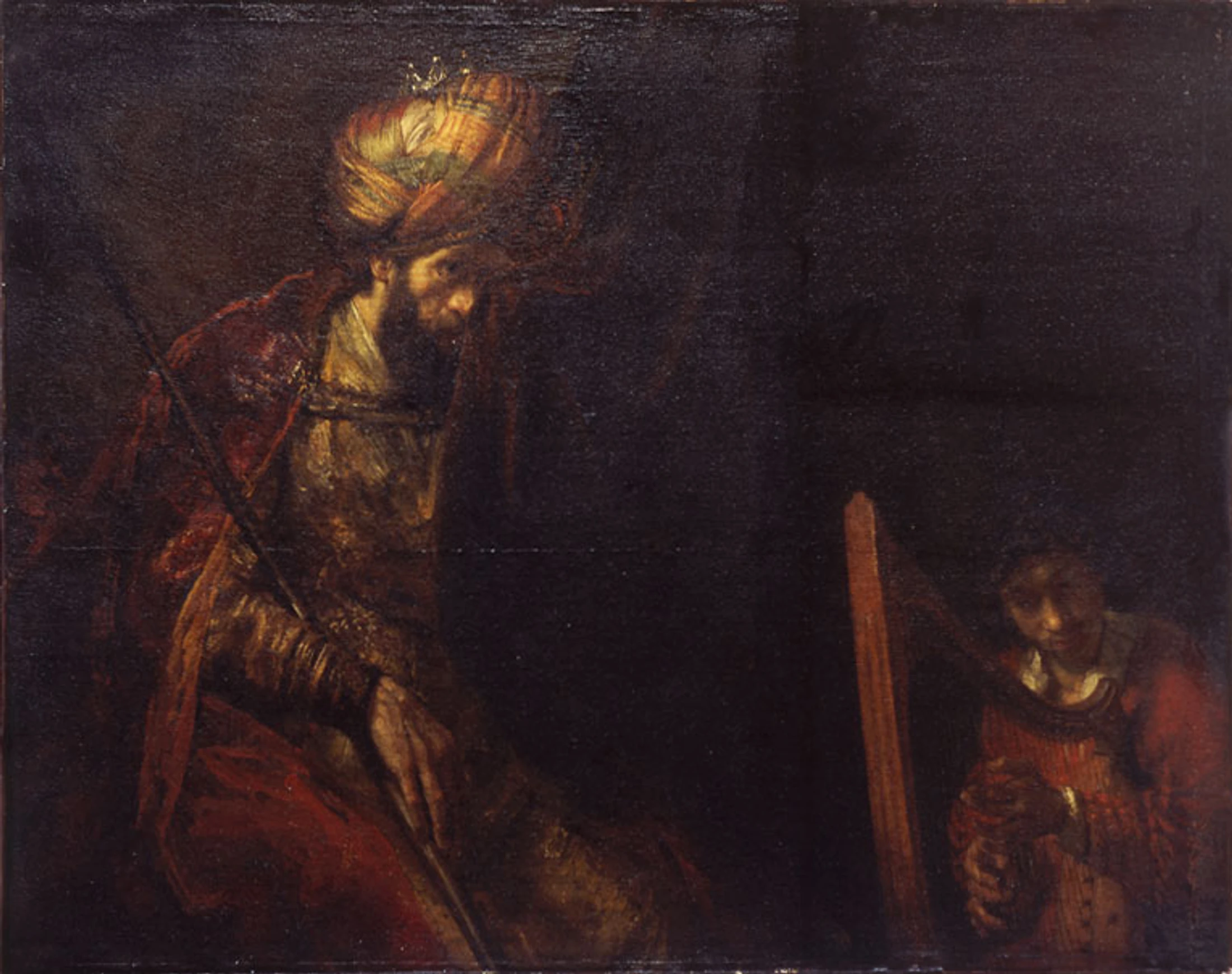
A few weeks ago, I wrote about the faith of Jonathan and his reasoning as he contemplated the battlefield near Michmash. This past Sunday, I preached on that same passage, and for the blog this week, I want to look at how Jonathan’s faith contrasts with Saul’s. The structure of the narrative—the way that the story is told—seems to be intended to draw that contrast. Why do I say that?
Chapters 13 and 14 are a single continuous narrative; this is a single long story about the opening phase of the war between the Philistines and Israelites. This is the war that will consume the rest of Saul’s kingship. The Philistines are the most dangerous and powerful enemy of the Israelites. But the author of 1 Samuel ends this narrative in a curious way. The whole story is very unflattering to Saul, yet the final few paragraphs provide a very complimentary summary of his reign. Here Saul emerges as a warrior king acting valiantly against the many enemies of the nation. It would seem that Saul actually did a lot to secure the eastern front, even if he would have only limited success against the Philistines. The story that precedes this has prepared you for a negative summary, yet, on the whole, Saul’s conduct as a warrior is positive.
What is the reason for this? I think it is to highlight something about Saul, and about the contrast between Jonathan and Saul in the story. Saul is, in fact, a very competent and successful warrior. The author says he is valiant! Yet in this story, he appears to be very incompetent. Let’s list his mistakes here:
His plan to spur all of Israel into rebellion against the Philistines does not work, and he ends up with fewer men than he had at the beginning.
He neither withdraws from battle nor goes out to fight—instead, he lingers indecisively as his men melt away.
His indecision continues even after they are arrayed to fight the Philistines—he has no plan of attack.
Once the battle begins, he makes a vow that hinders his own army at a crucial point.
He calls an unnecessary halt rather than pursuing the victory further.
He attempts to kill the one person most responsible for the victory.
He does not appear valiant in the least. Saul is instead the biggest impediment to the victory itself. He does not initiate battle, makes decisions that limit the effectiveness of his army in that battle, and then calls a halt to the battle when there is still a possibility of further gains.
The moments when we are dropped into Saul’s narrative as a warrior have similarities. Keep in mind that he probably was almost constantly at war, yet the few battles we see him in tend to be unflattering. Yet we know from this aside that he had many successes. The author is attempting to do something. A modern, cynical reading would be that the author is being deliberately critical because they are working under the reign of Saul’s successor and want to flatter David at the expense of Saul. If that were the case, though, why include this paragraph, as well as other accounts of his success? Why contrast Saul with his own son, thereby showing that the issue is not in Saul’s house? There was a fierce conflict early in David’s reign between Saul’s house and David’s over the succession—if this was purely political, Jonathan’s successes would not be highlighted either.
The author instead wants to show us the nature of faith not only through the example of Jonathan, but also through its absence in Saul. And the absence of faith is most clearly seen not in moments of strength, but in moments of weakness. Saul was strong, and so we need to see these moments of conflict with the Philistines—so much more powerful than Israel—to understand how his faith worked. Saul simply did not trust in the Lord. We can see what he trusted in, or what he looked to, in these crisis moments.
He trusted in his plan. This is the same as trusting in his own strength and wisdom. Saul always trusted his own power as a warrior. When he was in situations where this could not help him, he was paralyzed.
Saul trusted in the performance of religion. This, at least, is what he tended to turn to in a crisis. He offers his sacrifices, he consults the ark, he swears his vows—in each case he is attempting to compel God to act on his behalf.
What do you tend to look to in a crisis moment?